A philosophical worldview or belief system grounded on the 20th century discovery that Information, rather than Matter, is the fundamental substance of everything in the universe. It is intended to be the 21st century successor to the ancient worldviews of Materialism and Idealism. An Update from Bronze Age to Information Age. It's also a Theory – of – Everything that covers, not just matter & energy, but also Life & Mind & Love.
Post 152.March 22, 2026
The Origin of Everything
Consciousness and Idealism
As a basis for the reasoning and conclusions in this book, Rowland postulates that “there may be a nonphysical reality that transcends time and space, a universal connectedness among all things, a strong mind-world connection, a fundamental conscious-ness, and infinite possibilities”. He quotes physicist & astronomer James Jeans⁹, in his 1930 book, The Mysterious Universe, where he declared that a picture of the universe as a "non-mechanical reality" was emerging from the science of the day. Rowland next provides capsule descriptions of 48 philosophers and scientists, from antiquity to modernity, who expressed various views on philosophical Idealism¹⁰. As I noted before, astronomers, who study the near-infinite universe from the inside, and quantum theorists, who peer inside the microscopic material world, often adopt a philosophical worldview of Mysticism and Idealism.
And yet, there are others, such as theoretical physicist Lee Smolin, in his 2019 book, Einstein’s Unfinished Revolution, who remain committed to philosophical Realism¹¹, and refrain from the mysticism of some early quantum theorists. He says that Anti-Realists “have radical proposals to make about epistemology” (how we know). Yet, “Realists are interested in ontology, which is the study of what exists”. So, perhaps we may need an accomodating stance, of non-overlapping magisteria, as proposed by paleontolo-gist Stephen Jay Gould. Let scientists take an objective pragmatic approach to the subject of their study, yet allow philosophers to take a subjective experiential perspective of the data, as it is processed by the human mind.
Rowland, however, takes a more cosmic perspective : “reality consists of both a physical aspect and a nonphysical aspect”. And an “aspect” is what you see from a particular point of view. For example, Quantum randomness is the inherent, fundamental unpredictability of physical events at the subatomic level, where outcomes are probabilistic rather than deterministic. Yet, Rowland declares that “nothing ever happens by chance. . . . We use probability to predict events or outcomes when we do not know . . . what caused them”. Although Probability and Uncertainty are inherent in Quantum physics, he says, “probability, however, is a speculative mind game that has nothing to do with causality”. In other words, he’s saying that reality is completely deterministic, as specified by the divine laws that govern Nature. “ ‘God does not play dice with the universe’ is how Einstein dismissed random-ness”. But our understanding of the universe is not divine. So, we deal with Causation & Change based on Aspects, as viewed by the human mind, not as known by the First Cause.
I’ll now skip to the end of the book, where the author discusses Universal Mind. “Consciousness does not derive from brain function and is not part of the world in which the brain exists. Consciousness is part of the mind that infuses the universe”. Also, “thought is pure energy, without physicality”. I assume that is his interpretation of the evidence available, not a revelation direct from the top. Panpsychism and Pantheism seem to be a popular framework of belief for some philosophical scientists today. And my worldview of Enformationism is similar in some ways. But all I know about that god-like Mind is a nonphysical Aspect as seen from a limited understanding¹² of the Cosmos and of Causation.
— End of Post 152 —
9. Great Thought : The concept that "the universe begins to look more like a great thought than like a great machine" is a famous quote from physicist Sir James Jeans, suggesting the cosmos is better understood through mind, consciousness, or information rather than purely mechanistic, deterministic physics. This perspective emphasizes a, possibly, conscious or abstract design over a purely material one. https://www.google.com/search?client=firefox-b-1-d&q=universe+great+thought
10. Idealism : Idealism is the philosophical view that reality is fundamentally mental, spiritual, or immaterial, with ideas, consciousness, and mind forming the foundation of all existence. It posits that ideas precede matter and that the physical world is perceived or shaped by the mind, often emphasizing high principles and the pursuit of perfection. https://www.google.com/search?client=firefox-b-1-d&q=idealism
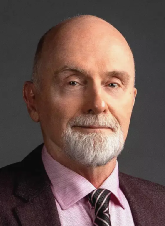
David Rowland
11. Realism vs Idealism : Realism and idealism are opposing metaphysical and epistemological theories.
12. Maya : Veil of Illusion "Now we see through a glass, darkly" is a phrase from 1 Corinthians 13:12 (KJV) meaning that human understanding of spiritual reality is currently limited, indirect, and imperfect. It suggests we perceive truth like a faint reflection in a dull, polished metal mirror rather than seeing it directly, with full clarity expected in the afterlife. https://www.google.com/search?client=firefox-b-1-d&q=for+now+we+see+through+a+glass+darkly
Holistic & Complex Systems The new properties that appear during a phase transition (e.g., the rigidity of ice versus liquid water's fluidity) are examples of emergence, where the collective behavior of a large number of particles results in system-level properties that individual particles do not possess. This concept is a fundamental aspect of complexity theory, which is mathematically compatible with a materialist and deterministic framework.
Complexity theory contrasts with determinism by showing that some complex systems can have emergent properties that are not reducible to the deterministic rules of their components, and these systems may not be predictable even if they are technically deterministic.. Determinism posits that all events are predetermined by prior causes, while complexity theory suggests that phenomena like consciousness and free will could emerge in complex systems where order and randomness interact
The Origin of Everything Science has mistaken consciousness for an effect when in truth it is a cause. Consciousness is the funda-mental principle of existence. We live in a consciousness based reality. Consciousness is at the root of existence, gravity, light, quantum mech-anics, life, and evolution. –From back cover of book–
Almost all of the world’s religions are based on some concept of a God or universal Mind that rules the physical world through laws, and humans by means of beliefs.


 BACK
NEXT
BACK
NEXT
 Forum
Forum