




 BACK
NEXT
BACK
NEXT
 Forum
Forum





Post 155. May 16, 2026
Hard Problem of Metaphysics
Brainwork is Easy ; Mindwork is Hard
Carlo Rovelli is an Italian physicist, who likes to dabble in meta-
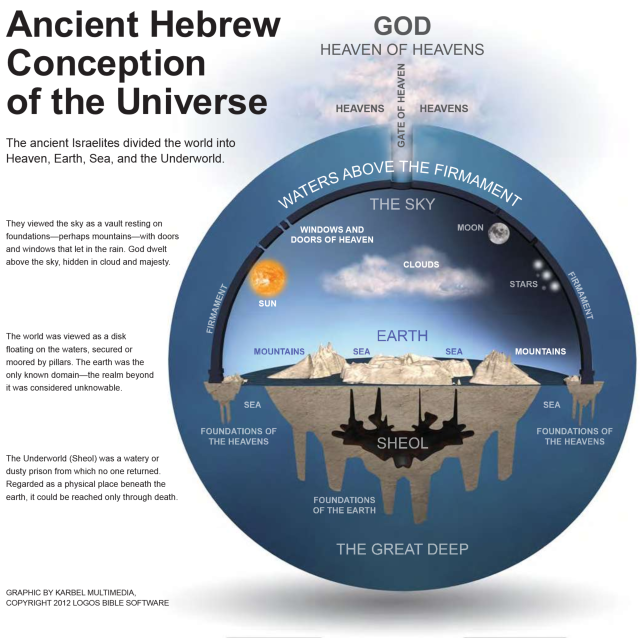
So early Christian theologians took the MetaPhysics label literally, to mean beyond & above the physical world. That distinction was probably similar to ancient Jewish and Greek models of the world, with Hell in a cave below, and Heaven above the clouds. Modern theologians, familiar with current cosmology, no longer take that childlike notion seriously. So the implicit dualism of Metaphysics has been spiritualized, just as Jesus, the Jewish cult leader, became mythologized into the cosmopolitan Christ ruling from a throne in the parallel idealized realm of Heaven.
The article’s position on Chalmer’s quibbling is that “today’s debate on consciousness reflects our human fears of belonging to the same family as inanimate matter and losing our dear, transcendent souls”. But what about those of us who don’t have souls “dangling over the pit of Hell”, as 17th century Puritan Johnathan Edwards put it? Even secular philosophy, and scientific Psychology, should be interested in understanding how Matter could host Mind. Rovelli admits that Science can’t explain everything. But philosophy can use “what-
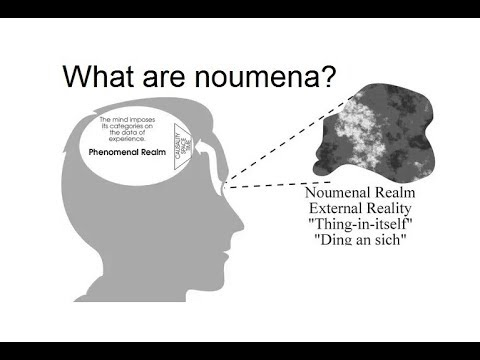
Rovelli admits that “The functioning of our own body and brain is among the phenomena we understand the least and are curious about the most”. And that “This is the proper intellectual space where the ‘problem of consciousness’ is located”. And yet the pertinent philosophical question here is whether Sentient Awareness is a physical Phenomenon, or a metaphysical Noumenon³. A phenomenon is by definition
“an observable fact”. But a noumenon cannot be detected by the physical senses, or scientific gadgets. It is only inferrable⁴ by logical reason : by reading between the lines for clues. And an inference is not a verifiable fact, but a debatable opinion.
Ideas and opinions are not physical objects, subject to scientific investigation, but merely metaphysical functions or behaviors of the meat brain. So, Rovelli again admits that the philosophical problem is “why the brain’s behavior is accompanied by experience at all”. But he seems to miss Chalmer’s basic point that the Hard Problem is not solvable by scientific methods. Therefore, the difficulty is in reaching a reasonable meta-
— End of Post 155 —
3. Noumenon :
In philosophy, a noumenon is an unknowable reality or "thing-
https://www.google.com/search?client=firefox-
4. Inference :
To infer means to reach a conclusion or form an opinion based on reasoning, evidence, and clues, rather than on direct statements.
https://www.google.com/search?client=firefox-
Phenomena :
Edmund Husserl and Martin Heidegger define "phenomena" differently. For Husserl, phenomena are the pure objects of consciousness, accessed by "bracketing" the outside world to uncover universal essences. For Heidegger, phenomena are the practical, everyday experiences of the world in which we are already fundamentally entangled.



Phenomena as Epistemology (Ideas)
For Husserl, a phenomenon is "how things appear" in conscious experience.
Phenomena as Ontology (Reality)
Heidegger rejected Husserl's detached, conscious observer who brackets the world. He argued that humans (which he called Dasein) are always already embedded in the world.
Heidegger seems to deny that humans can imagine things that are not real, that are not here and now : i.e. Creative Thinking, Designing, Planning for the future. But he simply redefines “Imagination” as merely rearranging past experience. And yet the novel Idea may be a pattern that has never existed in reality.
