A philosophical worldview or belief system grounded on the 20th century discovery that Information, rather than Matter, is the fundamental substance of everything in the universe. It is intended to be the 21st century successor to the ancient worldviews of Materialism and Idealism. An Update from Bronze Age to Information Age. It's also a Theory – of – Everything that covers, not just matter & energy, but also Life & Mind & Love.
Post 149.December 19, 2025
BothAnd vs Either/Or Philosophy
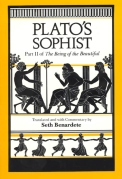
Pragmatism vs Sophistry
Therefore, the BothAnd⁶ approach to philosophy may be guided by archetypal Idealized principles, but it is also intended to be useful for flesh & blood beings in a real material world. The ancient Sophists⁷ may have been legalistic realists, who depended on human reasoning, rather than divine revelations for guidance in real-world affairs. Unfortunately, they were caricatured by idealist Plato as using clever but fallacious reasoning to win arguments. But they may also have fore-shadowed Einstein’s modern secular worldview based on the ambiguity of our knowledge, as contrasted with the absolute pronouncements of religious idealists and the binary thinking of some secular philosophers.
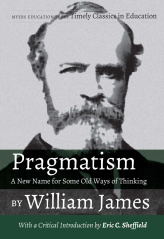
Since we do not actually live in Plato’s imaginary ideal world, of universal absolutes, perhaps even the theoretical thinking of modern philosophy should be adapted to our imperfect reality, and incomplete knowledge, of our physical and immanent world, by emulating the more pragmatic attitude of Aristotle⁸. Or, we can follow the reasoning of a more modern philosopher : William James. He argued that Truth and Meaning should be judged by their practicality in the real world of ordinary people, not the ideal world of academic philosophers and theologians. Scientific Facts and philosophical Truths are tools for making our way in a physical and social habitat. Of course, philosophers will typically compare those practical ideas & instruments against more perfect examples, in order to improve on their instrumentality in real-world applications. Especially, as our scientific know-ledge expands & evolves over time. It wouldn’t be wise to depend on third century BC physics & psychology, for 21st century situations.
However, although some of the “practical wisdom” of ancient Sophists might be out-dated today, and their legalistic tactics would only be appropriate for politics and courts of law, their moral relativity would fit right-in to our modern multiculturalism. Also, Einstein’s scientific notion of relativity, and associated philosophy of cognitive framing, forced us to view the world from a variety of personal perspectives. That came as a shock to both classical philosophers, fixated on ancient Greek Idealism, and classical scientists, based on 17th century models. That’s why, in the 17th century, Thomas Bayes, a minister & philosopher, formulated a theorem for assessing & updating our facts & beliefs, as newer information is acquired. Which was later validated by scientific discoveries in the 20th century : that most of our knowledge, and beliefs, are only probabilistically true.
The BothAnd philosophy is a worldview for the 21st century, where even our scientific knowledge is incomplete & uncertain, and available information is relative to personal frames.
The BothAnd philosophy is an experiment, which applies the idealist implications of the Enformationism worldview to real-world quandaries that are still being debated after millennia of study by Theologians, Scientists, and Philosophers.
6. BothAnd Philosophy :
"Both/and" in philosophy is a way of thinking that embraces multiple truths simultaneously, moving beyond "either/or" false choices to find synthesis, seen in dialectical reasoning, pragmatism, and non-dualism, where opposing ideas can coexist or create a richer understanding, like accepting being sad and hopeful, or having a keyboard and a mouse. It's a tool for integrating complexity, used across management, psychology, and spirituality to find creative solutions and deeper insights https://www.google.com/search?client=firefox-b-1-d&q=both+and+philosophy
7. Sophistry : In philosophy, sophistry is the use of clever but fallacious or misleading arguments, often for personal gain or to deceive, rather than to seek genuine truth, stemming from ancient Greek teachers (Sophists) criticized by Plato and Aristotle for prioritizing rhetoric over substance. . . .
Sophistry continued . . . .
Pragmatism New name for old ways of thinking
Sophistry continued . . . . . . It involves presenting specious reasoning, like a false statement that sounds true, to win debates or manipulate people, focusing on winning arguments through clever language (rhetoric) rather than sound evidence. https://www.google.com/search?client=firefox-b-1-d&q=sophistry+philosophy
8. Aristotelian Pragmatism Aristotle exhibits strong pragmatic tendencies through his focus on practical wisdom (phronesis), the search for achievable good life (eudaimonia) for most people, and viewing knowledge as rooted in experience and action, making his ethics and politics foundational for later pragmatic thought. He emphasized "what works" in real human contexts, seeking the middle ground (golden mean) for flourishing, rather than purely idealistic states, aligning with pragmatism's emphasis on practical results and situated understanding. https://www.google.com/search?client=firefox-b-1-d&q=aristotle+pragmatism
Holistic & Complex Systems The new properties that appear during a phase transition (e.g., the rigidity of ice versus liquid water's fluidity) are examples of emergence, where the collective behavior of a large number of particles results in system-level properties that individual particles do not possess. This concept is a fundamental aspect of complexity theory, which is mathematically compatible with a materialist and deterministic framework.
Complexity theory contrasts with determinism by showing that some complex systems can have emergent properties that are not reducible to the deterministic rules of their components, and these systems may not be predictable even if they are technically deterministic.. Determinism posits that all events are predetermined by prior causes, while complexity theory suggests that phenomena like consciousness and free will could emerge in complex systems where order and randomness interact
Post 148 Continued . . . click Next
Bayesian beliefrefers to the concept of representing facts or knowledge as probabilities, which are updated using Bayes' theorem as new evidence emerges, forming the core of Bayesian inference . . . It's a powerful tool for reasoning under uncertainty in AI, medicine, and data science. https://www.google.com/search?client=firefox-b-1-d&q=bayesian+beliefs





 BACK
NEXT
BACK
NEXT
 Forum
Forum